

Braces gently move your teeth into better alignment, but they also require special care during treatment. With the guidance of Dr. Joseph Ryan, you will learn how to clean, care for, and maintain your braces, which can help you stay comfortable and keep your smile healthy.
How to Clean and Care for My Braces
Keeping your braces clean is essential for preventing cavities, gum inflammation, and staining around brackets.
Best practices include:
- Brushing after every meal with a soft-bristle toothbrush
- Cleaning around brackets and wires using small circular motions
- Flossing daily with floss threaders or orthodontic floss
- Rinsing with water if you cannot brush right away
- Using fluoride toothpaste to strengthen enamel
- Applying orthodontic wax to areas of irritation if needed
Your orthodontic team may also recommend an interdental brush or water flosser to make cleaning easier.
What is the Correct Brushing and Flossing Process?
It’s more important than ever to brush and floss regularly when you have braces, so the teeth and gums are healthy during orthodontic treatment. Patients who do not keep their teeth clean may require more frequent visits to the dentist for a professional cleaning. Adults who have a history of gum disease should also see a periodontist during orthodontic treatment. Watch the two videos below on the proper care of braces during orthodontic treatment.
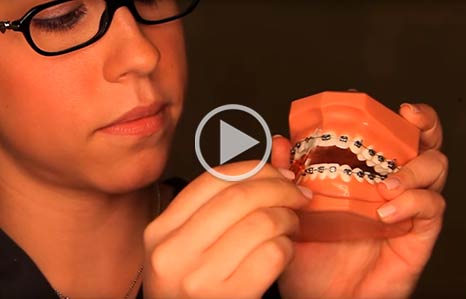
What Can I Eat with Braces?
What can you eat? Let’s talk about what you shouldn’t eat! For the first day or so, stick to soft foods. Avoid tough meats, hard bread, and raw vegetables. Before long, you’ll be able to bite a cucumber again. But you’ll need to protect your orthodontic appliances when you eat for as long as you’re wearing braces.
What Foods Should I Avoid?
- Chewy foods: bagels, hard rolls, licorice
- Crunchy foods: popcorn, ice
- Sticky foods: caramels, gum
- Hard foods: nuts, candy
- Foods you have to bite into: corn on the cob, apples, carrots
Chewing on hard things (for example, pens, pencils or fingernails) can damage the braces. Damaged braces will cause treatment to take longer.
Soreness and Comfort Tips
It is normal to feel general soreness for a few days after braces are placed. Teeth may feel tender when biting, and cheeks or lips may become irritated.
Over the counter pain relievers such as Tylenol can help.
Irritated areas can be soothed by placing orthodontic wax on brackets.
As your mouth adjusts, discomfort decreases significantly.
Loose Teeth: What’s Normal?
Teeth feeling slightly loose during treatment is expected. Loosening is part of the movement process. Once treatment is complete and your new bite stabilizes, your teeth will feel firm again.
What Should I Do If a Wire or Bracket Comes Loose?
If a wire is poking, gently tuck it back toward the tooth using the eraser end of a pencil.
If irritation continues, place orthodontic wax over the area.
Contact the office promptly to schedule a repair appointment.
FAQ
Why Is Rubber Band Wear So Important?
Rubber bands help guide the bite into proper alignment, something braces alone cannot achieve. Wearing them consistently keeps your treatment on schedule and ensures the teeth and jaws move the way your orthodontist planned.
Can I Play Sports With Braces?
Yes. You can safely play sports while undergoing orthodontic treatment. Your orthodontist will recommend a protective mouthguard to shield both your teeth and braces from impact during contact or high-risk activities.
What Should I Do If a Bracket or Wire Breaks?
If a bracket or wire comes loose, contact your orthodontic office as soon as possible. In the meantime, orthodontic wax can cover sharp edges to keep your cheeks and lips comfortable.
How Do I Know If My Braces Are Working As They Should?
You should feel slight pressure after adjustments, and your orthodontist will monitor progress at each visit. As long as you maintain good hygiene and follow instructions, your braces will continue moving teeth effectively.